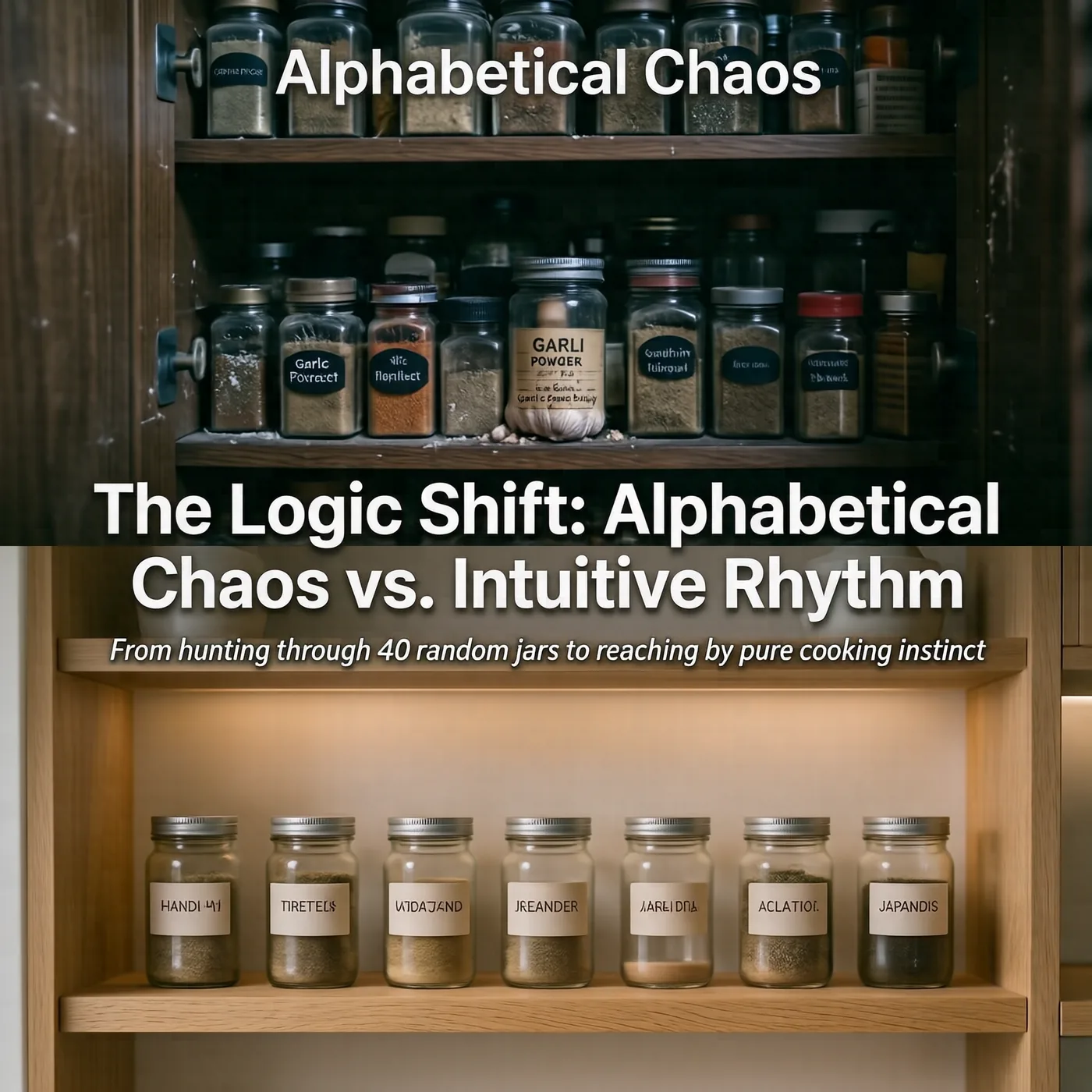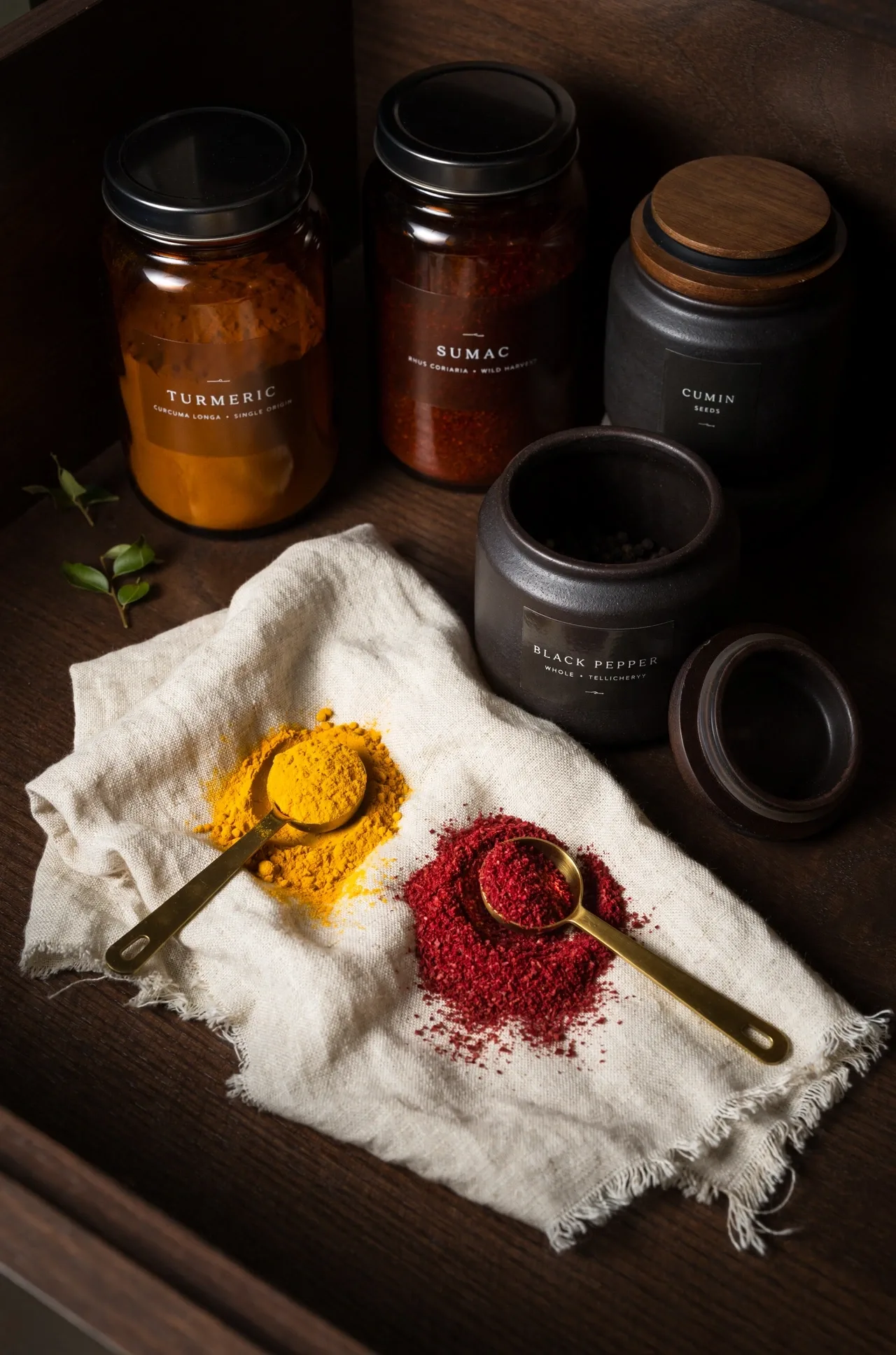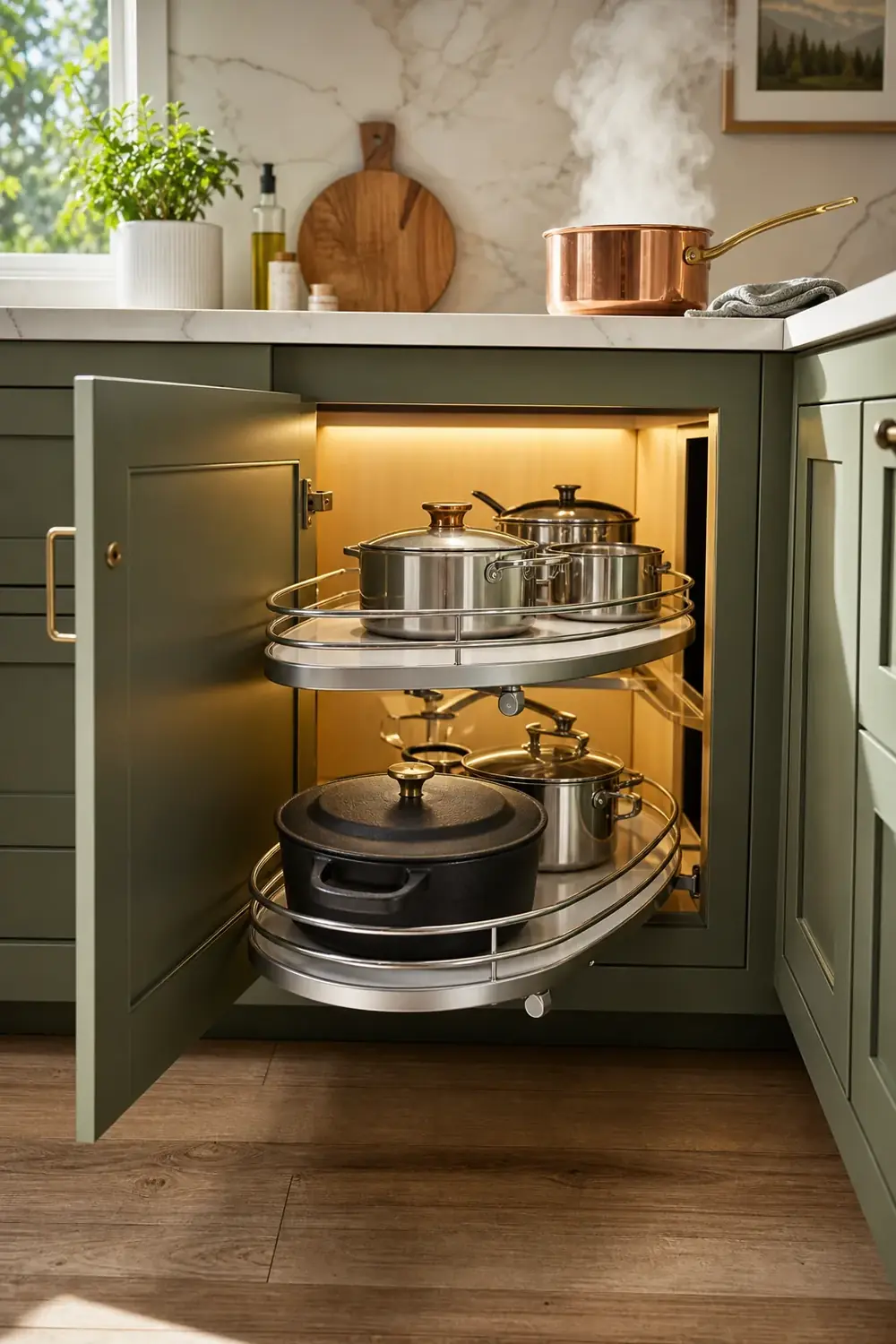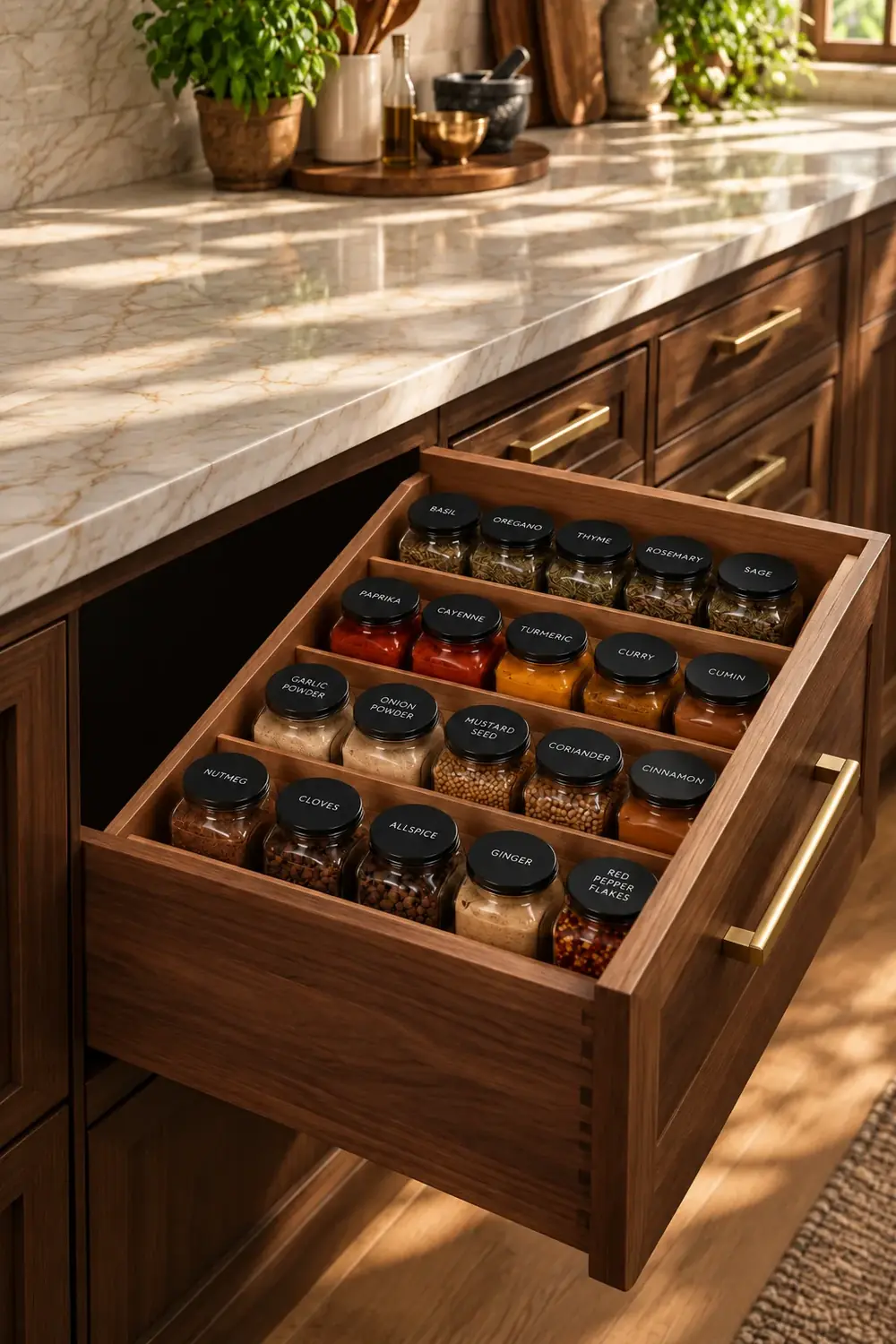
Alphabetical spice racks are the classic example of organising for how something looks rather than how it is used. Nobody reaches for cumin by thinking about the letter C.
Why alphabetical fails
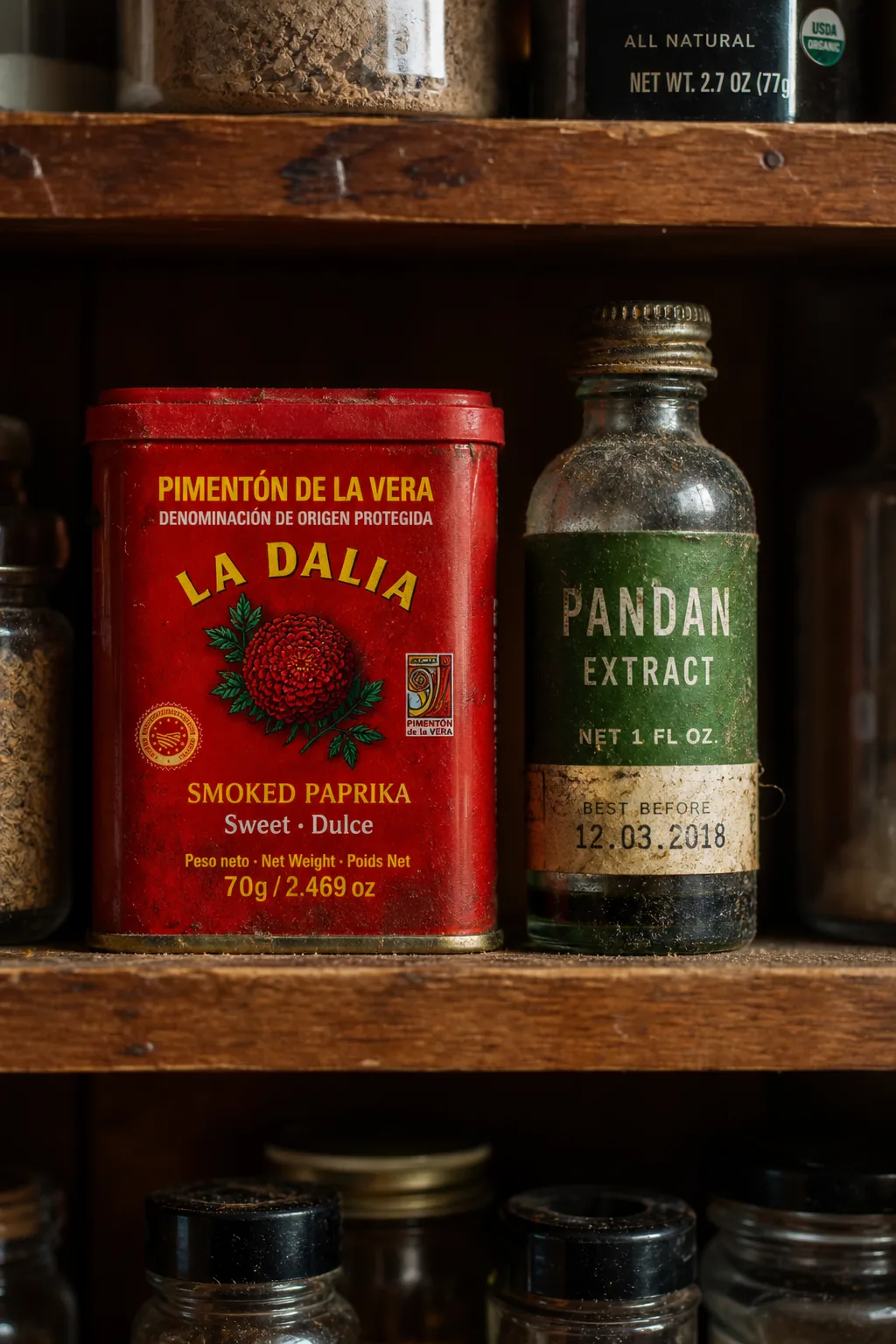
When you are cooking you reach by habit and by frequency, not by name. An alphabetical rack puts the paprika you use four times a week next to the pandan extract you bought once. Every single time you cook you scan the whole rack.
Sort yours into three piles
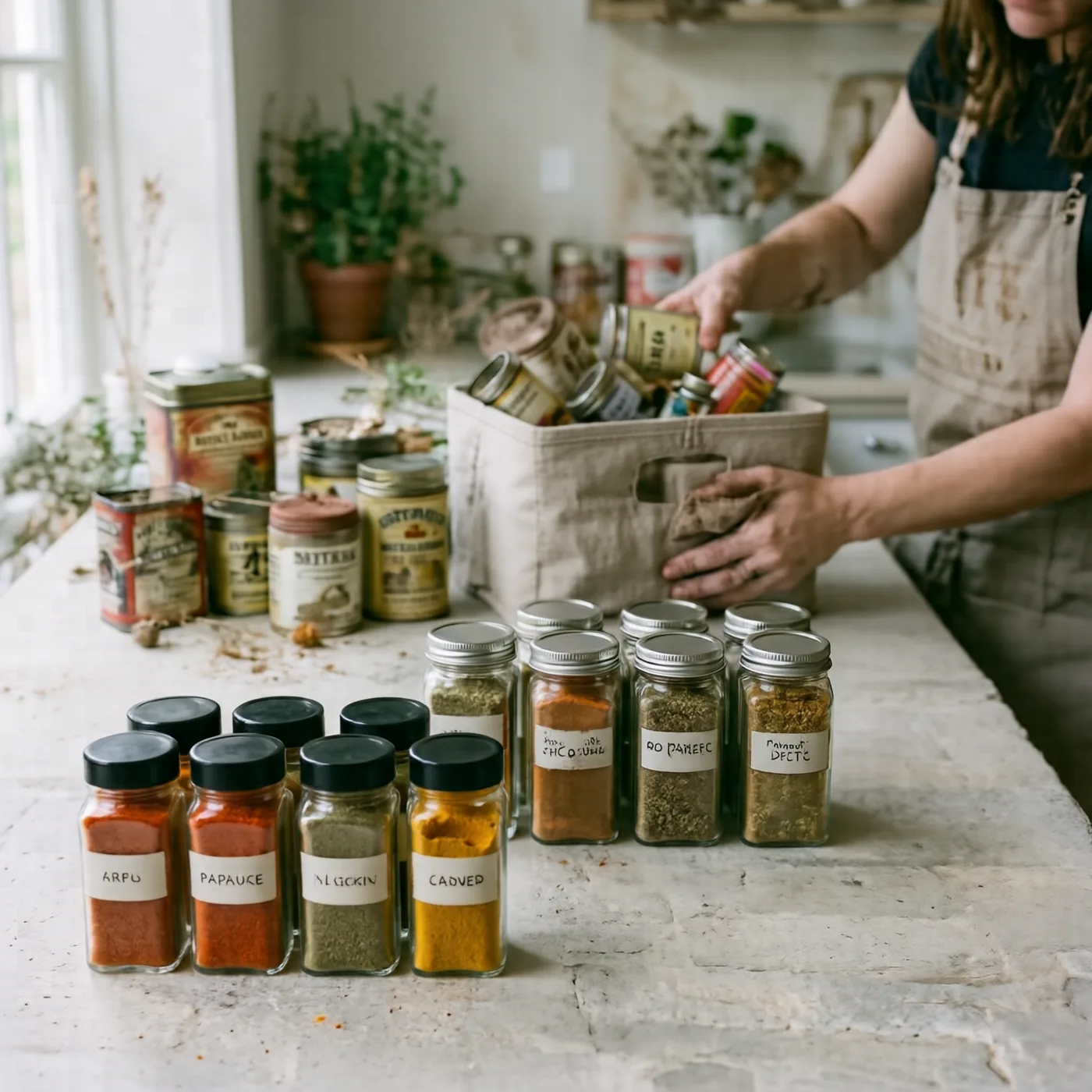
Empty the cupboard onto the counter. Pile one: things you use weekly. Pile two: things you use monthly. Pile three: things you have not touched in a year. Be honest with pile three - most people find six or seven jars there.
Where daily spices should live
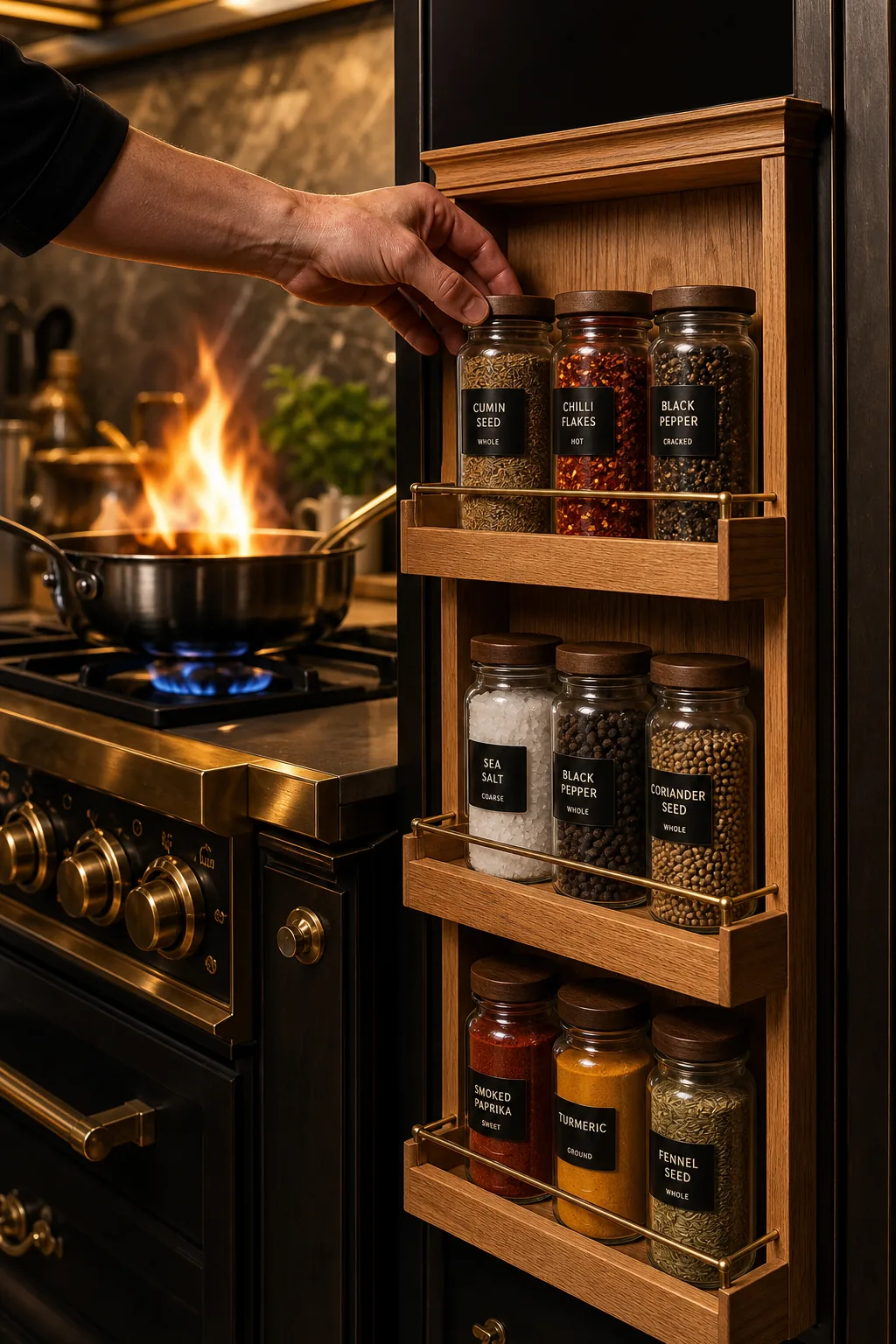
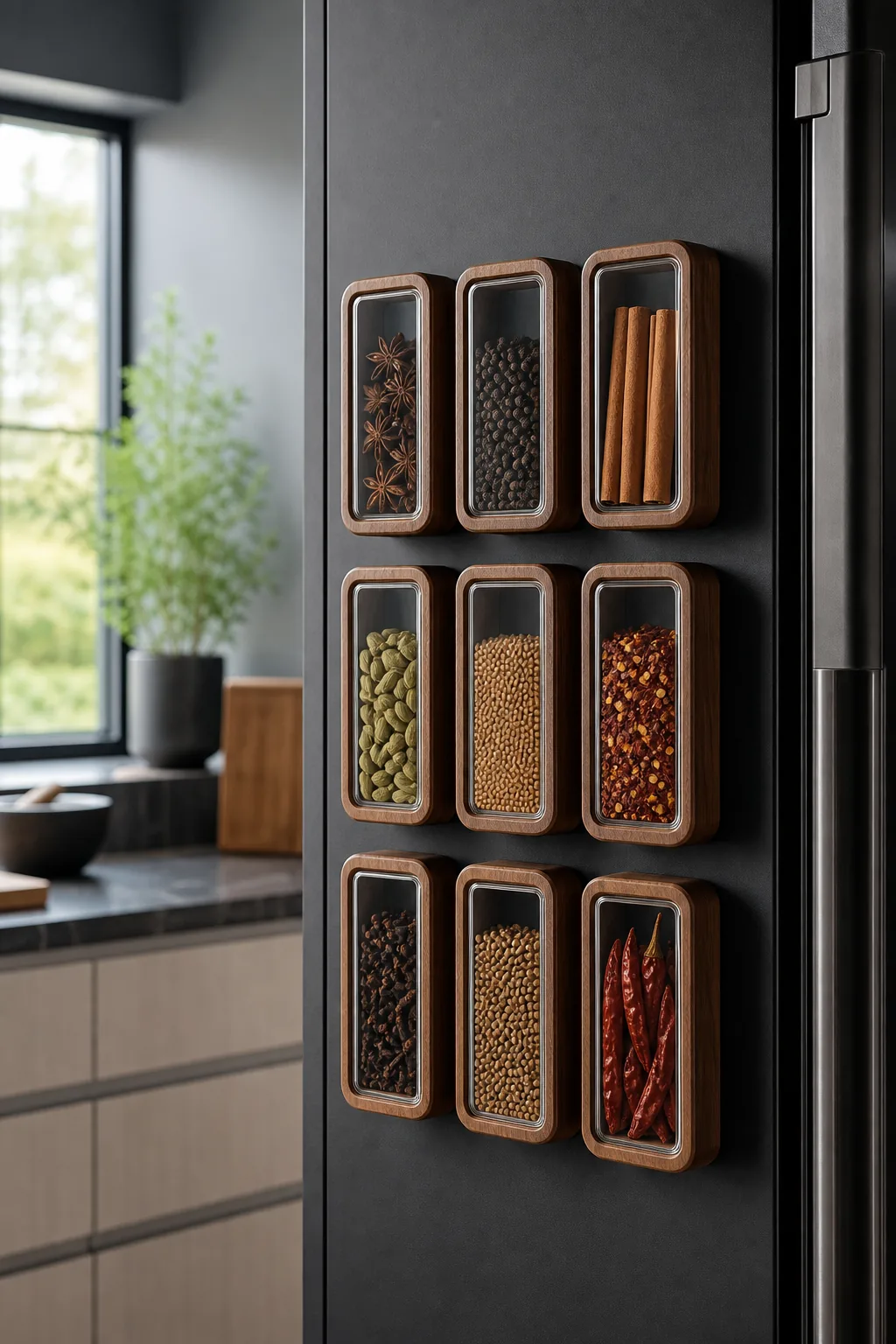
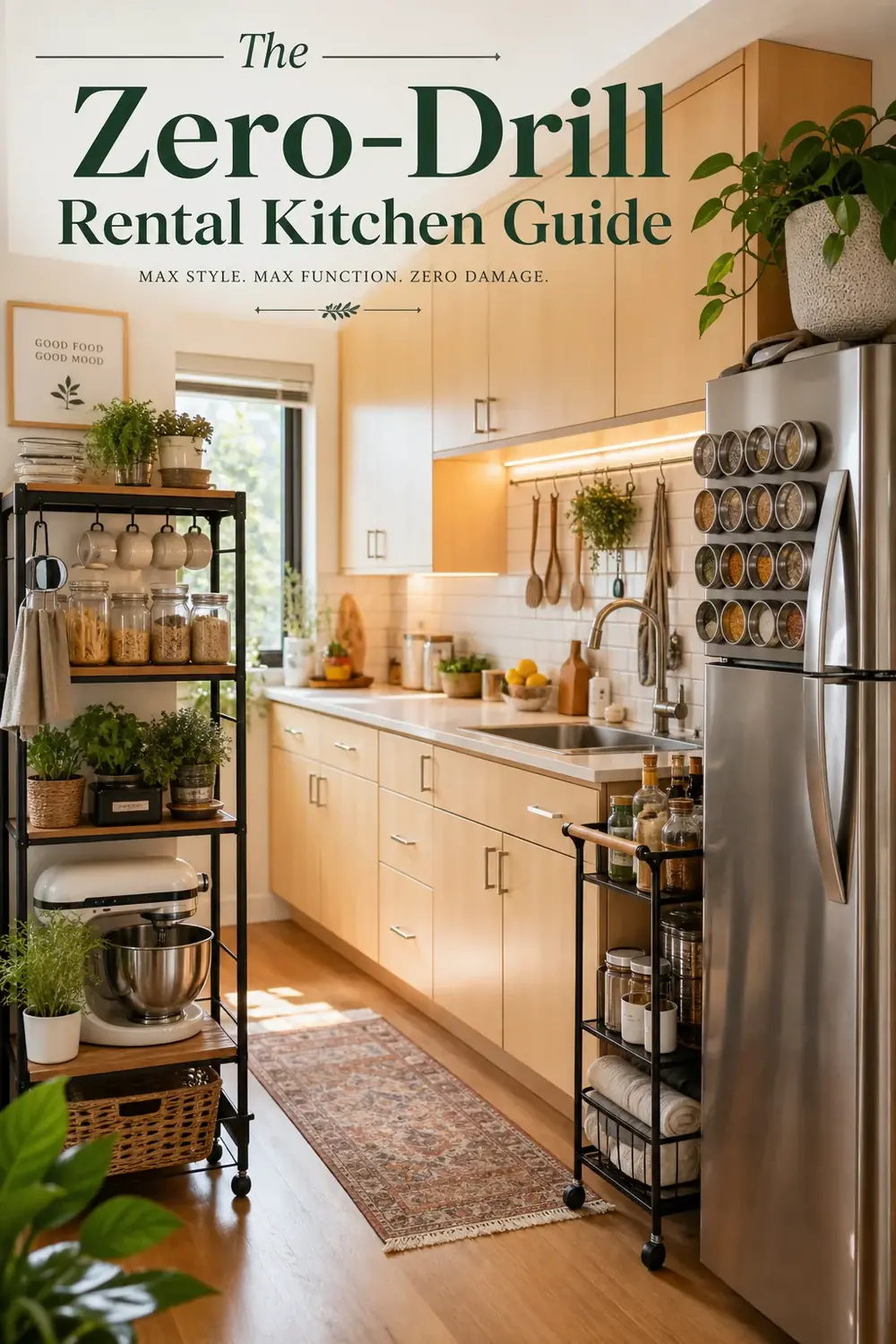
Within arm's reach of the hob, at eye level, in something you can see into. A tiered shelf inside a cupboard, a magnetic set on the fridge side panel, or a shallow drawer insert that lets you read the lids from above.
Where the rest should live
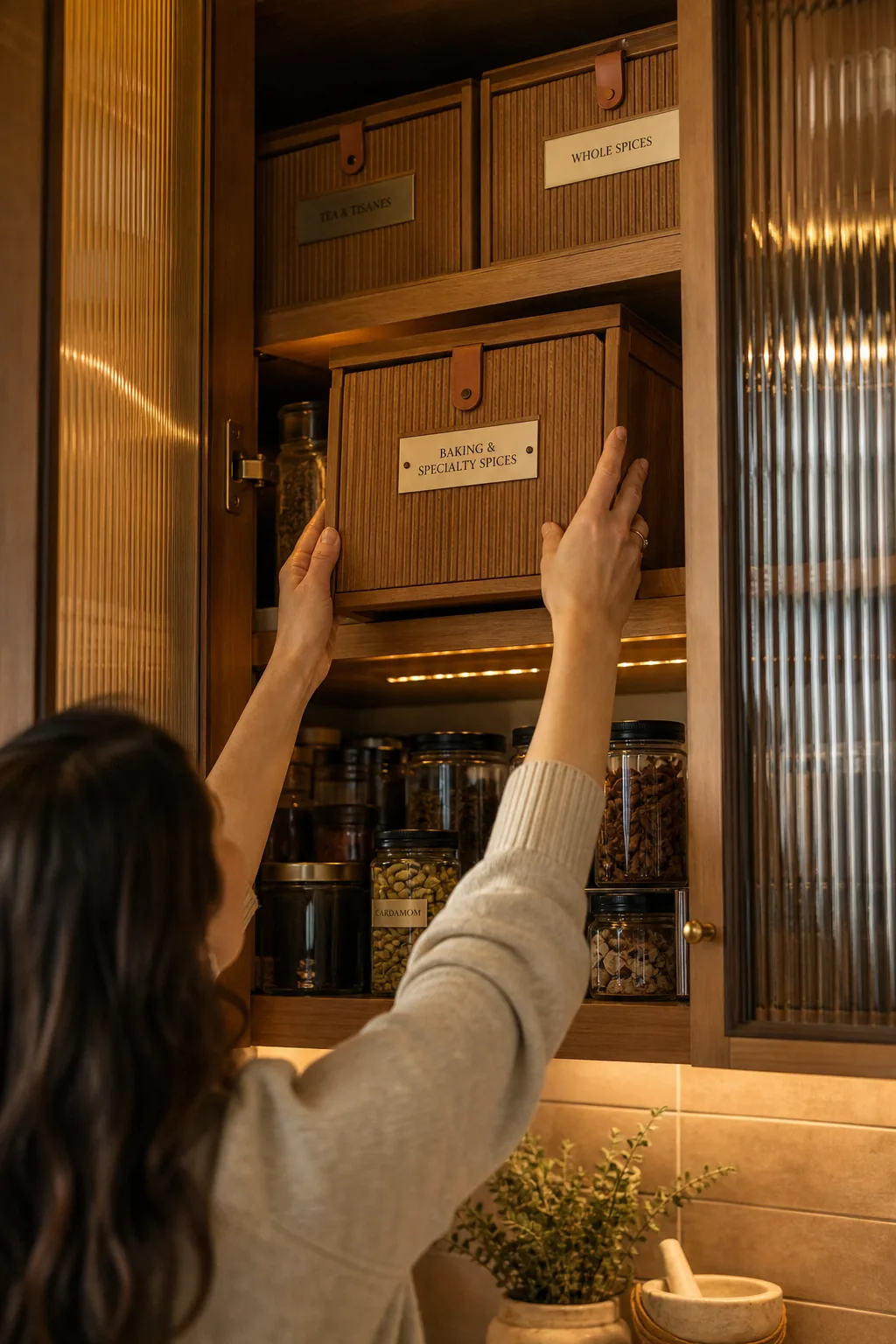
Higher up, further back, or in a labelled box you pull down when you need it. They do not need prime real estate and giving it to them is what makes the everyday spices hard to find.
Label the top, not the side
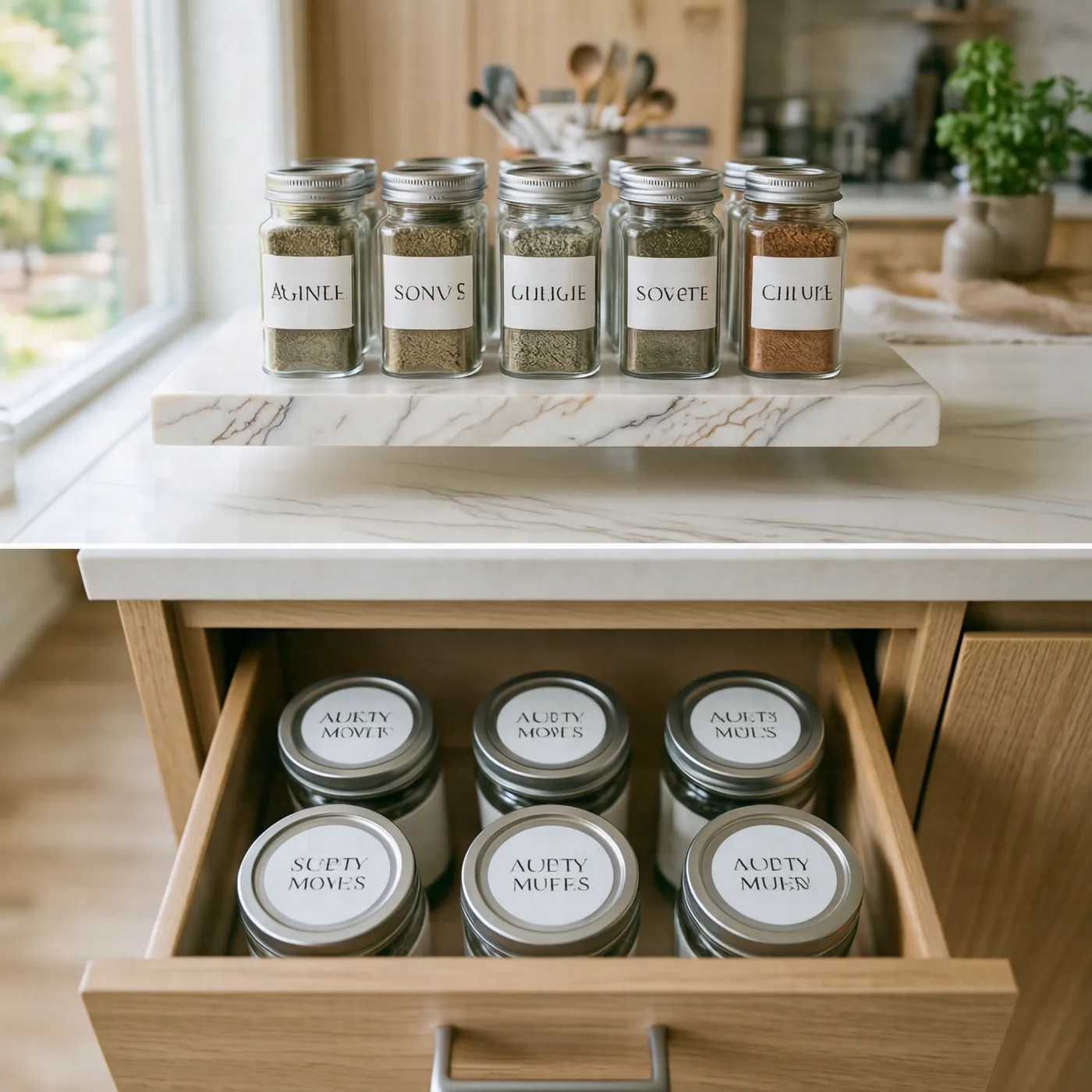
If your spices live in a drawer you read them from above, so the label belongs on the lid. If they live on a shelf you read them from the front. Label for the angle you will actually look from.
Heat and light are the real enemies
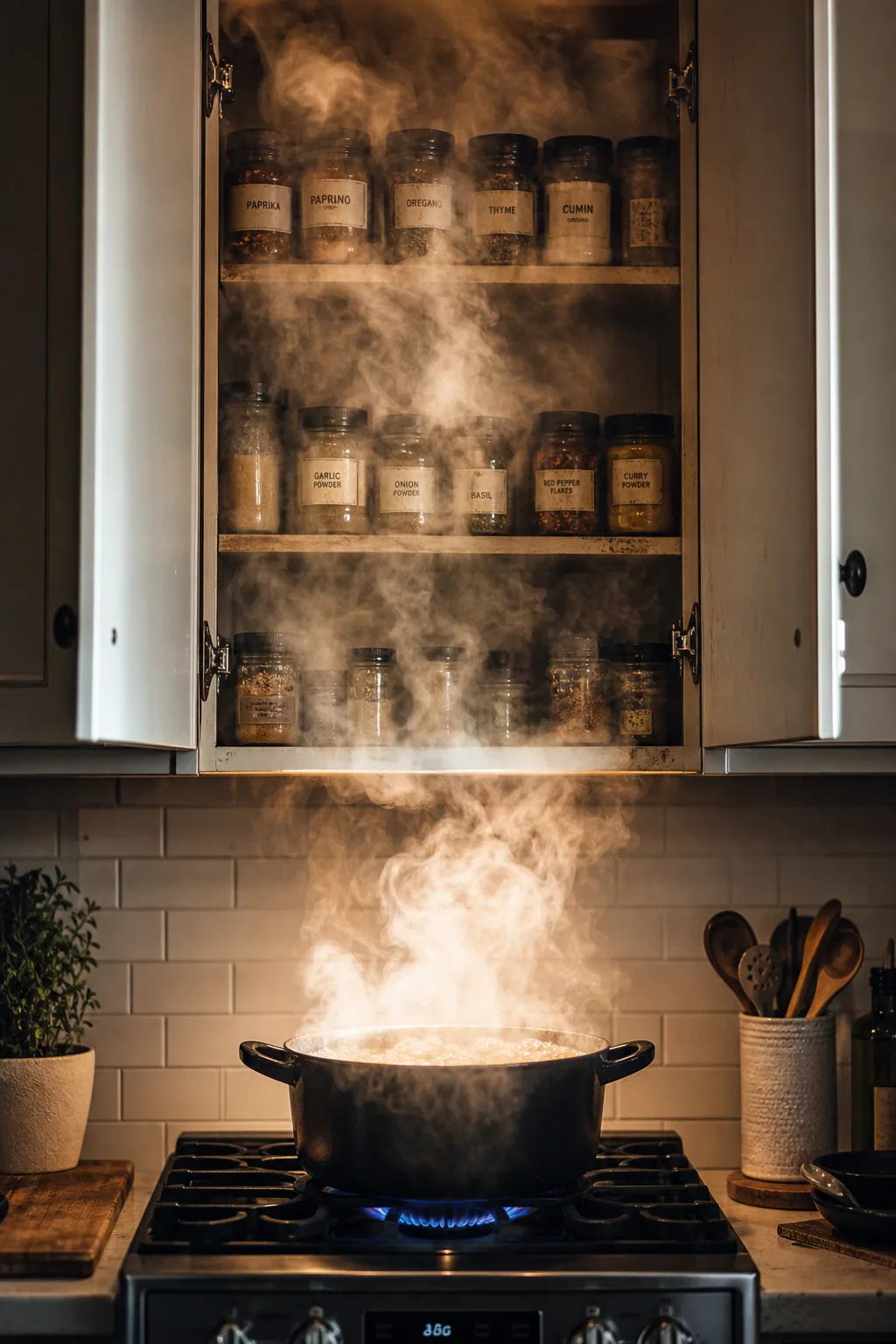
The cupboard directly above the hob is the worst place in the kitchen for spices, and it is where most people keep them. Heat and light strip the flavour within months. Anywhere else is better.
Be honest about it
I kept a spice rack directly above the cooker for two years because it looked convenient. Everything in it tasted of nothing and I assumed the brand was bad.