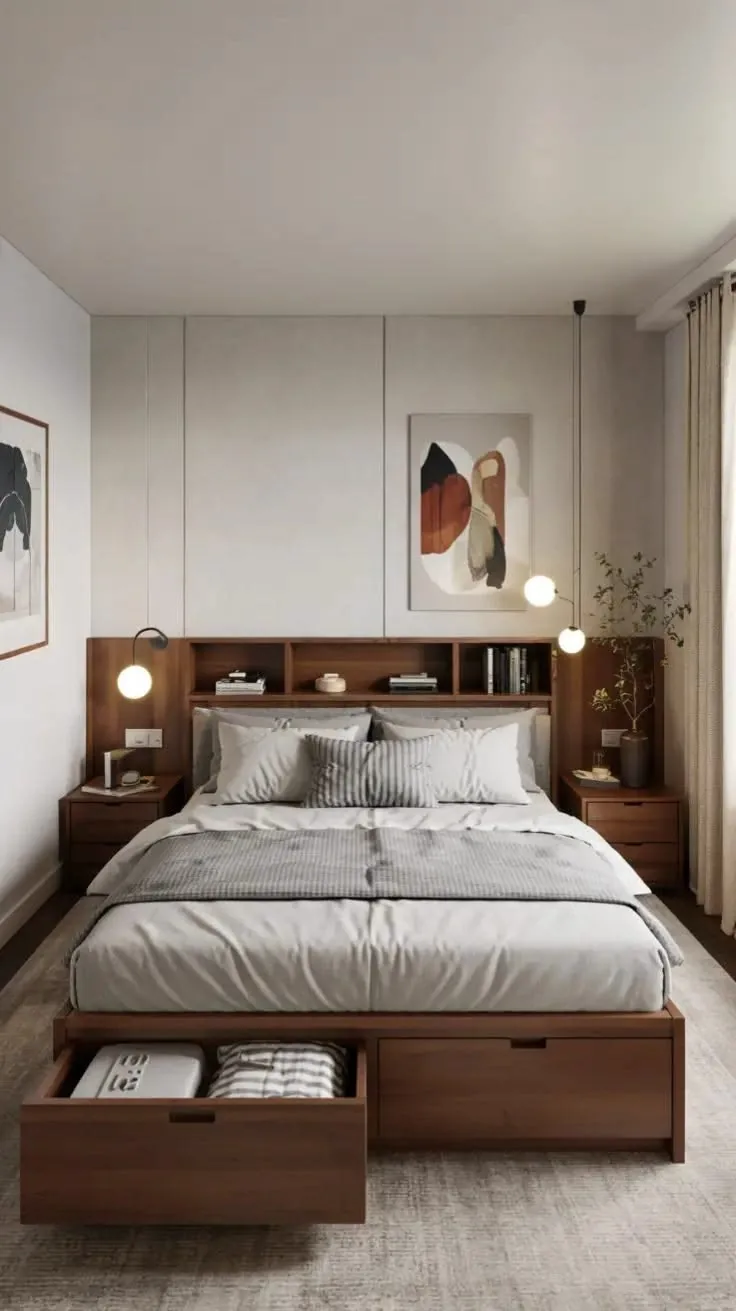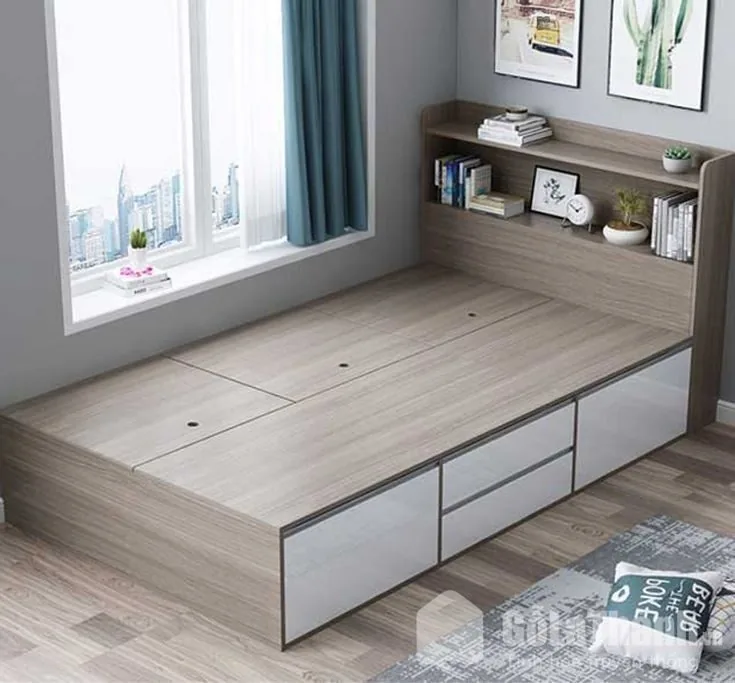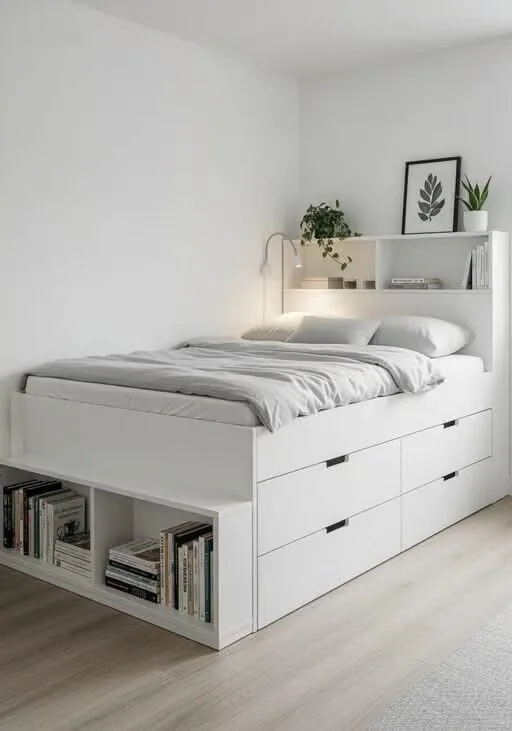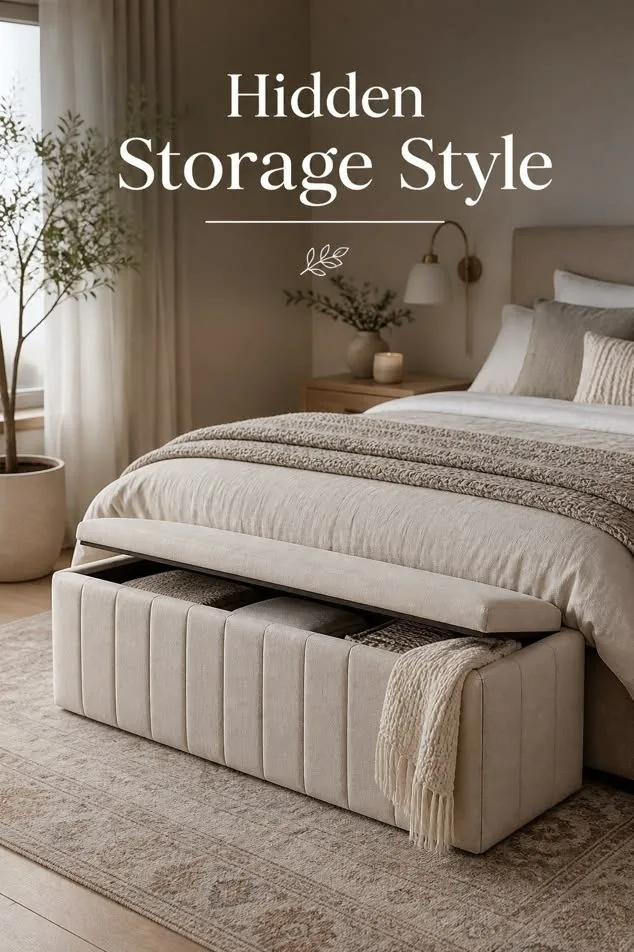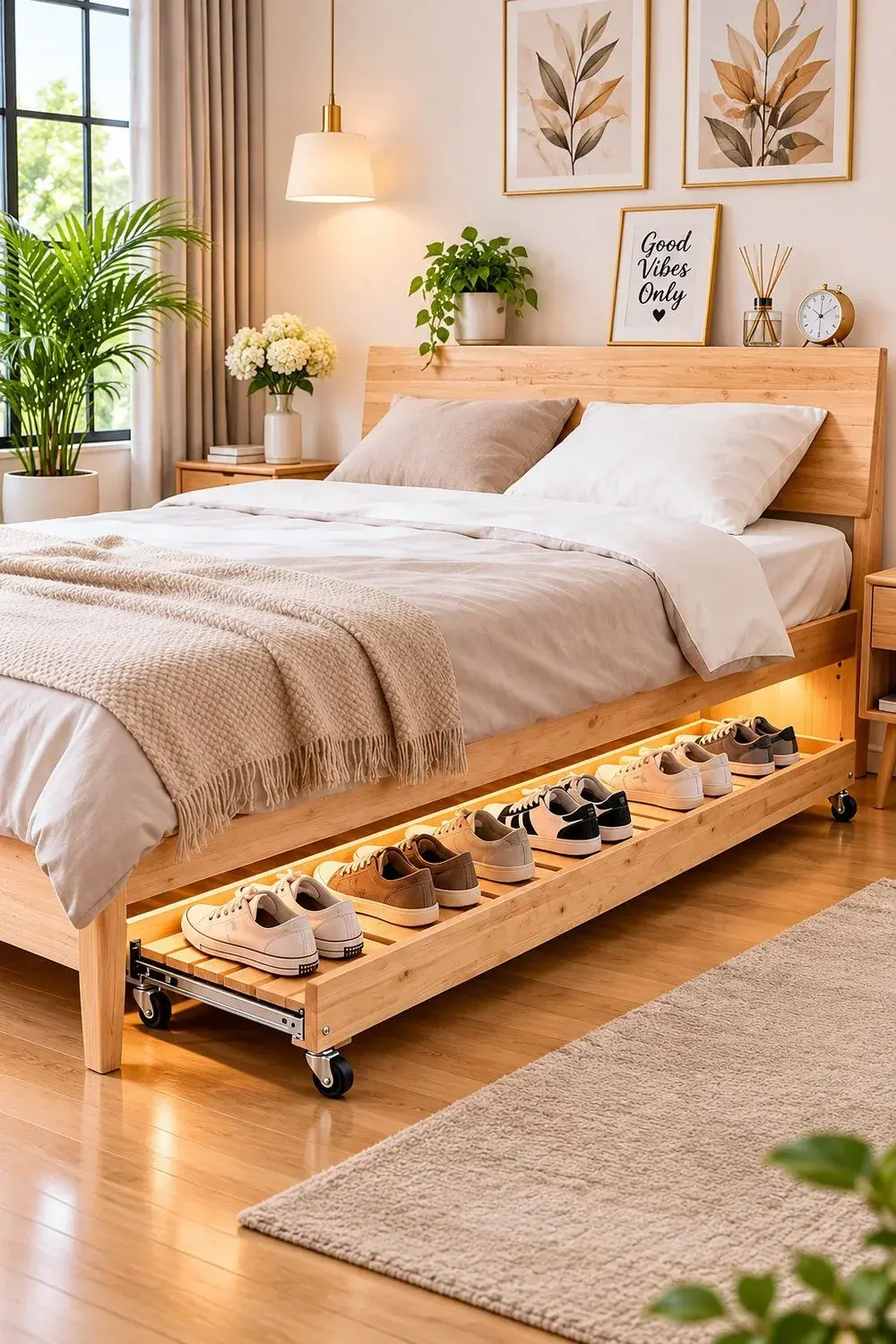
Under-Bed Storage That Does Not Turn Into a Dust Trap
Every storage article tells you to use the space under your bed. Almost none of them mention what actually happens six months later: a layer of dust over everything, and boxes so awkward to reach that you stop opening them.
The space is genuinely valuable. It just needs a few things the usual advice leaves out. The right container, a little planning, and an easy way to reach everything can turn the space under your bed into useful storage instead of a place where belongings collect dust.
Measure the Clearance Before You Buy Anything
Lie down and measure from the floor to the underside of the bed frame, not the mattress. Different beds have different amounts of clearance. Some divan beds have around 20–25cm, while many metal frames offer 30cm or more. Platform beds can have considerably less.
Measure the lowest point of the frame, including any support rails that might get in the way. If the bed has legs, check the space between them too. A storage box might fit underneath in terms of height but still be too wide to slide between the legs.
As a starting point, choose a container that is about 2cm shorter than your measured clearance. This gives you a little room to move, particularly on carpet. Check the container's actual outside dimensions, including its lid and wheels, rather than relying on the advertised storage capacity.
If you have thick carpet, a low bed frame, or a box that needs to be pulled out at an angle, allow extra clearance. The goal is not simply to make the box fit. It should slide out without scraping the frame or catching on the carpet.
Lids Are Not Optional
This is the single thing that decides whether under-bed storage works. An open basket under a bed collects dust continuously. A properly closed container gives stored belongings much better protection.
Dust does not need much space to get into fabric, bedding, or clothing. An open basket might look attractive when you first organize the room, but it can leave everything inside needing a wash before you use it again.
Choose boxes with lids that fit securely. A snap-on lid or a well-fitting cover is usually more practical than a loose piece of fabric that can shift when the box is pulled out.
If you prefer fabric storage, look for a bag with a full zipper or a fitted cover. A fabric container without a lid or closure is better suited to items you use regularly and do not mind cleaning frequently.
If you take one thing from this post, it is that every under-bed container used for long-term storage needs a proper cover.
Wheels Change How Often You Use It
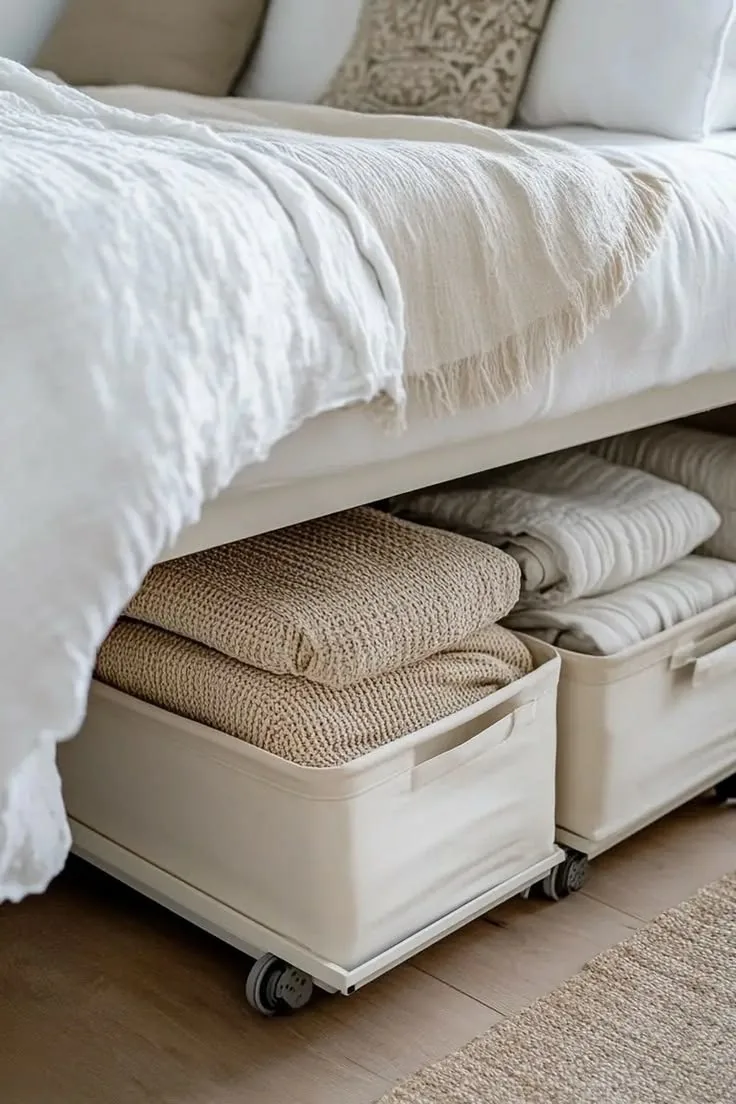
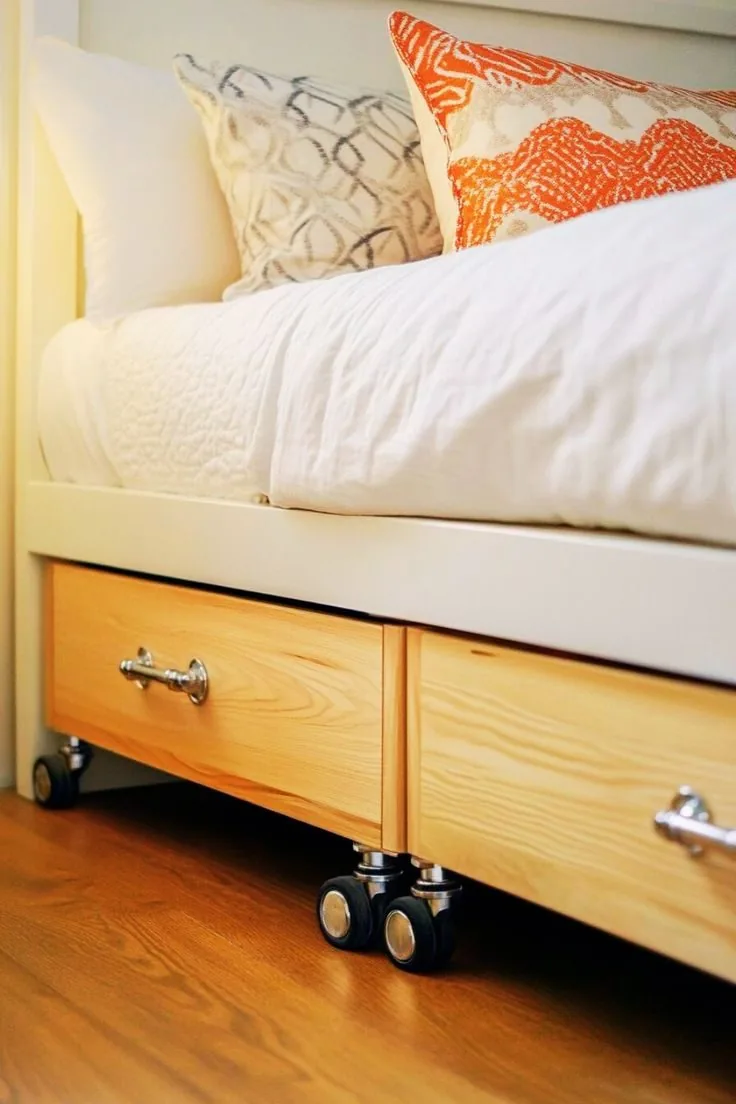
A box you have to drag out on carpet is a box you will avoid. Wheels turn a two-handed struggle into a much easier pull, and that difference decides whether the space stays useful or becomes a place where things go to be forgotten.
Rolling containers are especially useful for seasonal clothes, spare bedding, and other things you do not need every day. You can pull the box out, find what you need, and slide it back without moving the bed.
Check that the wheels are sturdy enough for the weight you plan to store. Small wheels can struggle on thick carpet, while some rolling boxes need more clearance than their non-wheeled alternatives.
If your bed has very little clearance, a flat storage container with a fitted lid may work better. The best option is the one you can actually reach and use without turning storage into a chore.
What Belongs Under There?
Under-bed storage works best for belongings you need occasionally rather than every few days.
- Out-of-season clothes
- Spare bedding and extra pillowcases
- Suitcases and travel accessories
- Wrapping paper and gift bags
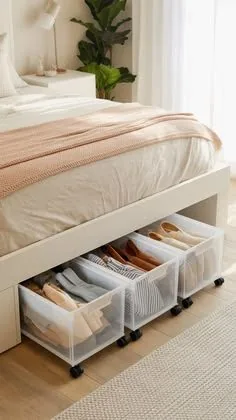
- Shoes you wear occasionally
- Extra blankets and suitable seasonal textiles
These are the things that take up valuable wardrobe or cupboard space but do not need to be within immediate reach.
Keep similar items together. One box for winter clothes, another for spare bedding, and another for travel accessories makes it easier to find something without opening every container.
Try not to fill every available space just because it is there. Leave enough room to pull containers out comfortably and avoid stacking items in a way that makes everything difficult to reach.
What Does Not Belong Under There?
Anything you need weekly is probably better stored somewhere easier to reach. The space under your bed should not become the place you have to visit every time you get dressed or change the bedding.
Be careful with anything that could be damaged by dampness or temperature changes. Paperwork, photographs, important documents, and delicate keepsakes are better stored in a more suitable location away from the floor.
The floor can be one of the dustiest areas of the bedroom, and some rooms are more prone to dampness than others. If you have a history of condensation, leaks, or moisture problems, avoid keeping valuable belongings underneath the bed.
If you do use the space for textiles, make sure everything is completely dry before putting it away. A closed container cannot protect belongings that were already damp when stored.
Vacuum Bags: Useful, With One Caveat
Vacuum storage bags can make a real difference when you are trying to store bulky items in a small space. They are especially useful for duvets, blankets, and suitable winter clothing.
By removing excess air, they can reduce the amount of space these items take up considerably. This makes them useful for seasonal storage when you want to free up room in your wardrobe.
However, do not use them for everything. Natural materials such as down and feather-filled bedding can lose their loft if kept compressed for long periods. Some delicate garments also need more careful storage.
Check the care instructions before compressing anything. If an item needs to retain its shape or natural padding, use a suitable container without prolonged compression.
Vacuum bags are a space-saving option, not a replacement for choosing the right storage conditions.
Label the End You Can See
The label belongs on the short end of the box, the one facing out. A label on the lid is invisible until you have already pulled the box out, which defeats the point.
Use a simple description rather than a vague label. "Winter Clothes" is more useful than "Clothes," and "Spare Bedding" tells you exactly what to expect.
If you use several containers, label each one before putting it under the bed. It takes seconds and saves you from pulling everything out when you are looking for one particular item.
Keep the label visible even when the container is pushed all the way underneath. If the box has a transparent side, that can help too, but a clear label is still useful.
Keep Dust From Becoming a Routine Problem
Even with lids, the area beneath your bed needs occasional attention. Dust can collect around the containers, along the bed frame, and on the carpet or floor.
Make cleaning underneath the bed part of your regular bedroom routine. Pull out the boxes when you vacuum, clean the exposed floor, and wipe the containers before sliding them back.
A quick check every few weeks is a useful starting point. Adjust the frequency depending on how quickly dust builds up, whether you have pets, and how often the room is used.
You do not need to move everything every time you clean the bedroom. The important thing is to avoid leaving the space untouched for months.
Do Not Overfill the Containers
It is tempting to use every bit of space available, but overfilled boxes are harder to close and more difficult to pull out.
Keep the lid flat and secure. Make sure clothing, blankets, and other belongings are not sticking out around the edges. An overloaded container can catch on the bed frame or become awkward to move.
If you cannot slide the box out comfortably, remove a few items or divide the contents between two containers. Storage should make your home easier to manage, not create another problem.
Be Honest About It
My first under-bed boxes were open-topped, and I picked them because they looked nicer. Within a season, everything inside needed washing before I could use it.
They were replaced with plain lidded boxes on wheels, and I have not thought about them since. Which is exactly what storage should feel like.
The space under your bed does not need complicated organizers or expensive containers. It needs storage that fits, keeps belongings covered, and lets you reach everything without a struggle.
Measure first, choose containers with suitable lids, keep the contents sensible, and clean underneath occasionally. Do those things and under-bed storage can stay useful without turning into another dust trap.
Frequently Asked Questions
What is the best type of under-bed storage?
Lidded storage boxes are a practical choice for most bedrooms because they help protect belongings from dust. Rolling boxes are especially useful when you have enough clearance and need to move them regularly.
How do I keep under-bed storage from getting dusty?
Use containers with secure lids, clean underneath the bed regularly, and wipe the outside of the boxes when you vacuum. Avoid open baskets for items you want to keep clean over long periods.
Can I store clothes under my bed?
Yes. Out-of-season clothes and suitable textiles can be stored under the bed when they are clean and completely dry. Use a covered container and follow the care instructions for delicate fabrics.
Are vacuum storage bags suitable for under-bed storage?
They can be useful for compressing bulky bedding and suitable seasonal clothing. Check the care instructions before compressing delicate materials or items that need to retain their natural loft.
How often should I clean under my bed?
A quick clean every few weeks is a reasonable starting point. Clean more frequently if you have pets, notice dust building up quickly, or have allergies that make bedroom dust particularly bothersome.