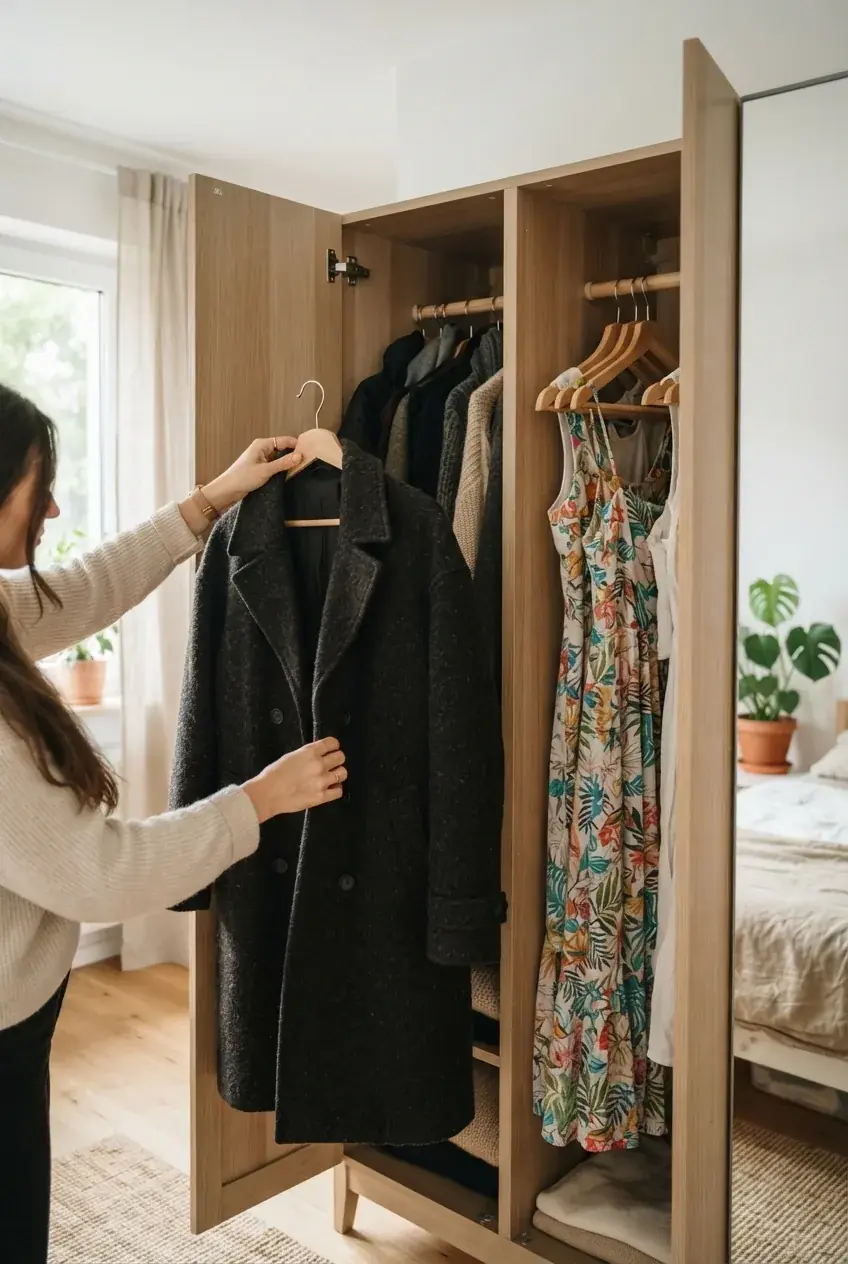
Plenty of older houses and converted flats have bedrooms with no closet at all. The usual advice is to buy a wardrobe, which is fine until you measure the room and realise a standard wardrobe takes a quarter of your floor space.
The better approach is to stop looking for one big solution and split the job into four: hanging, folding, shoes, and the things you wore once but will wear again. Create a ‘wear again’ hook. Jackets, jumpers and jeans you’ve worn once don’t belong in the wash or the drawer. A row of hooks or a valet stand by the door gives them somewhere to go, and stops the chair pile before it starts.
Where to START
“Before buying anything, empty your clothes onto the bed and sort them into the four groups. This tells you exactly what you need.”
Start by counting what actually hangs
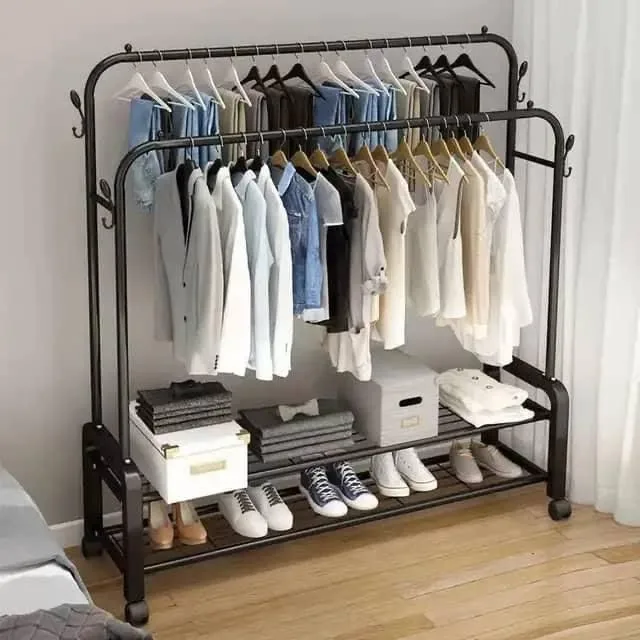
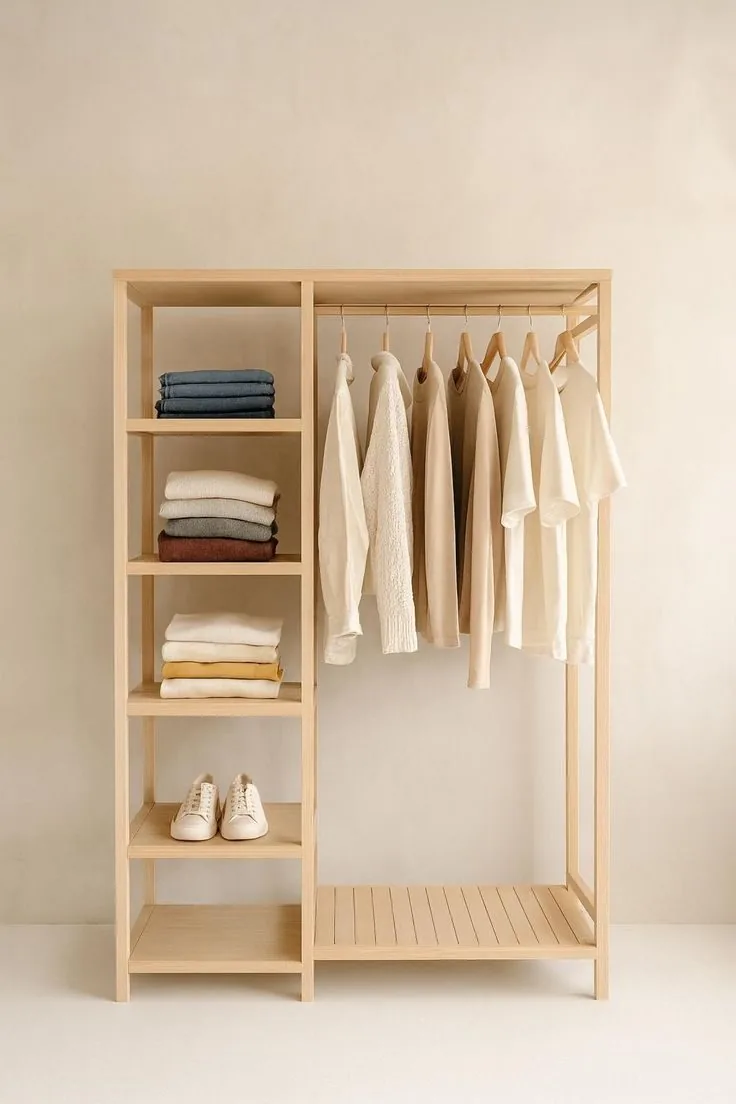
Most people need far less hanging space than they think. Shirts, dresses, jackets and anything that creases. Jeans, knitwear and t-shirts are better folded - hanging knitwear stretches the shoulders out. Count the hanging items first, then buy a rail to match. A 90cm rail holds roughly 25 shirts.
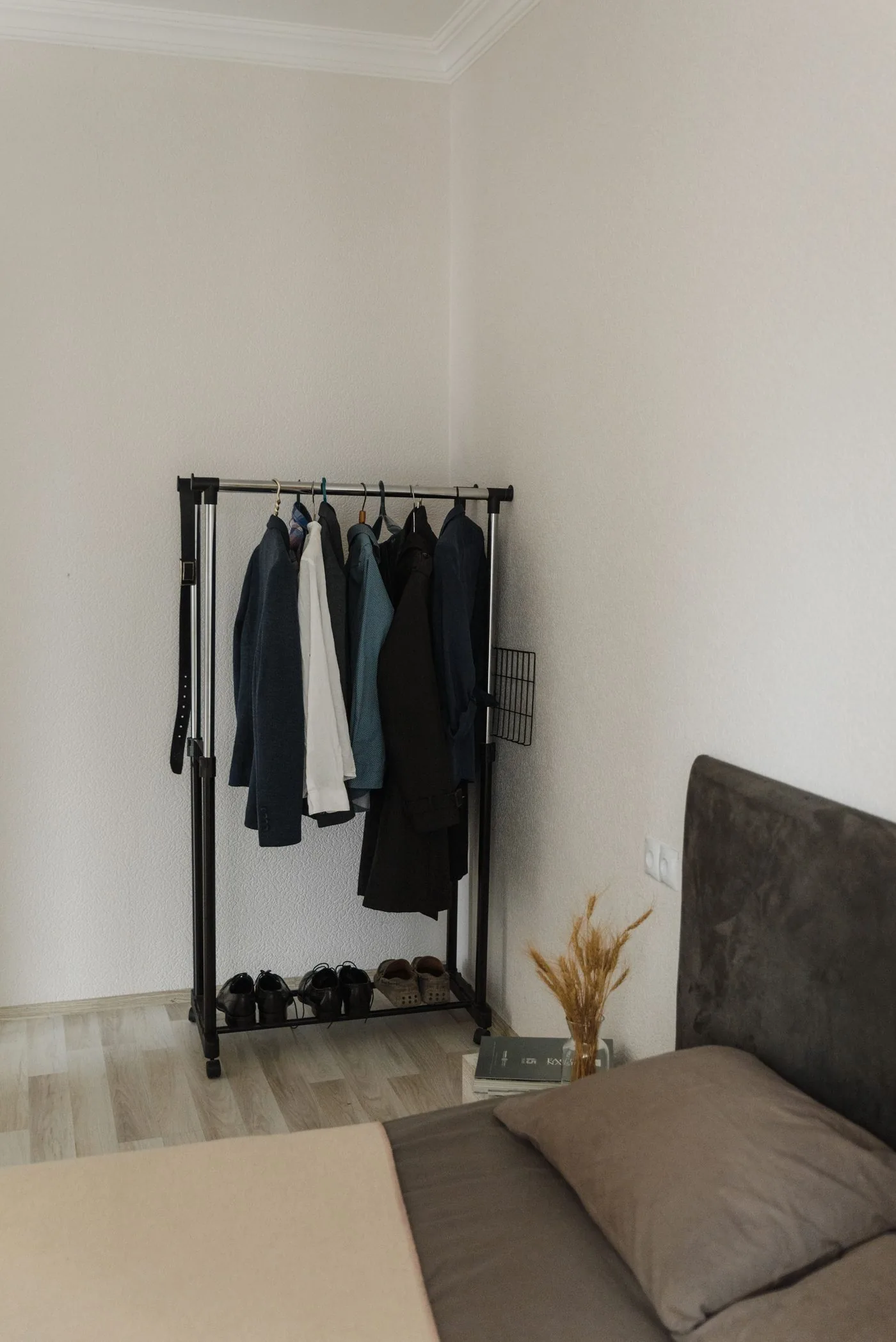
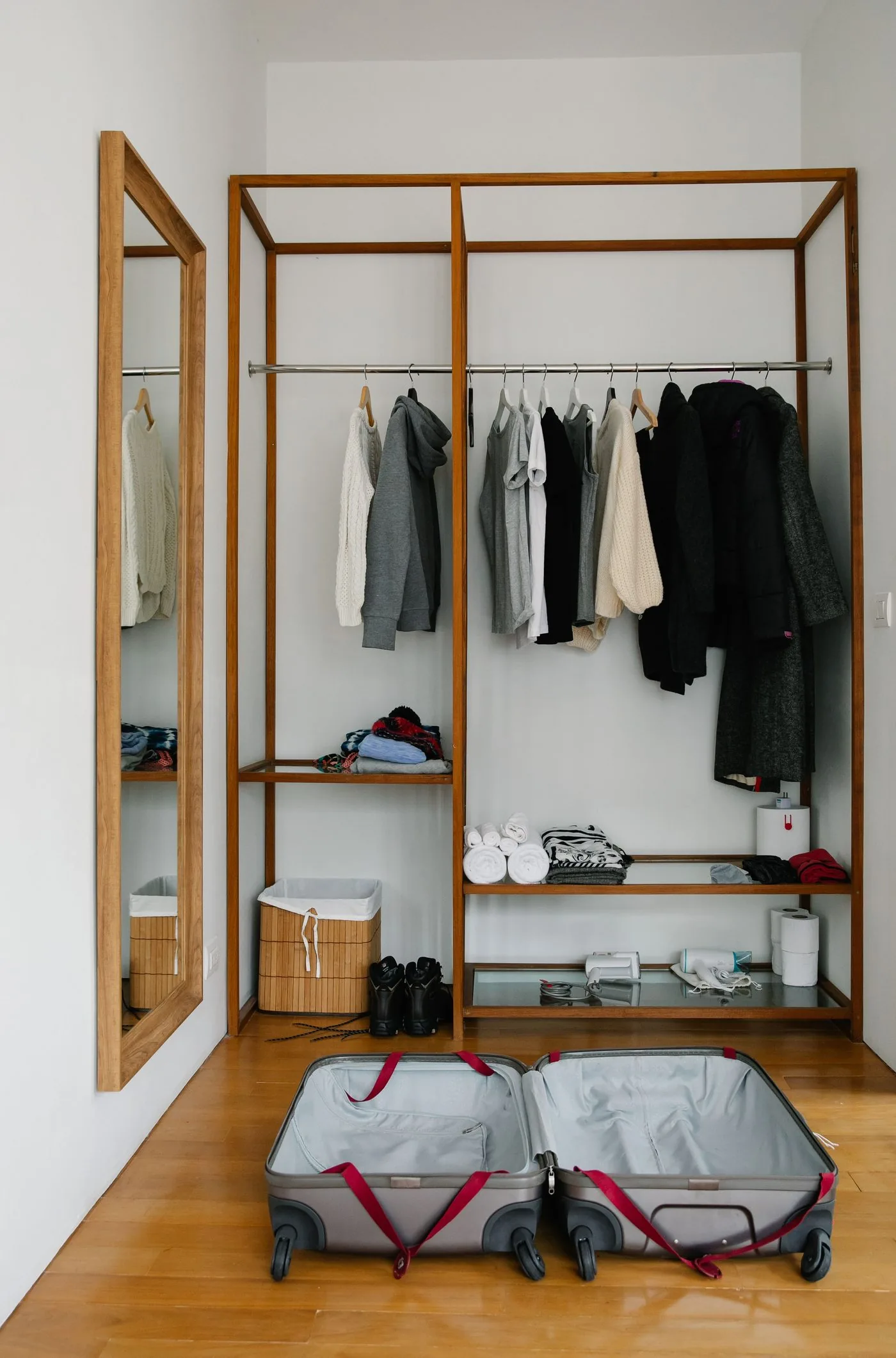
A clothes rail beats a wardrobe in a small room
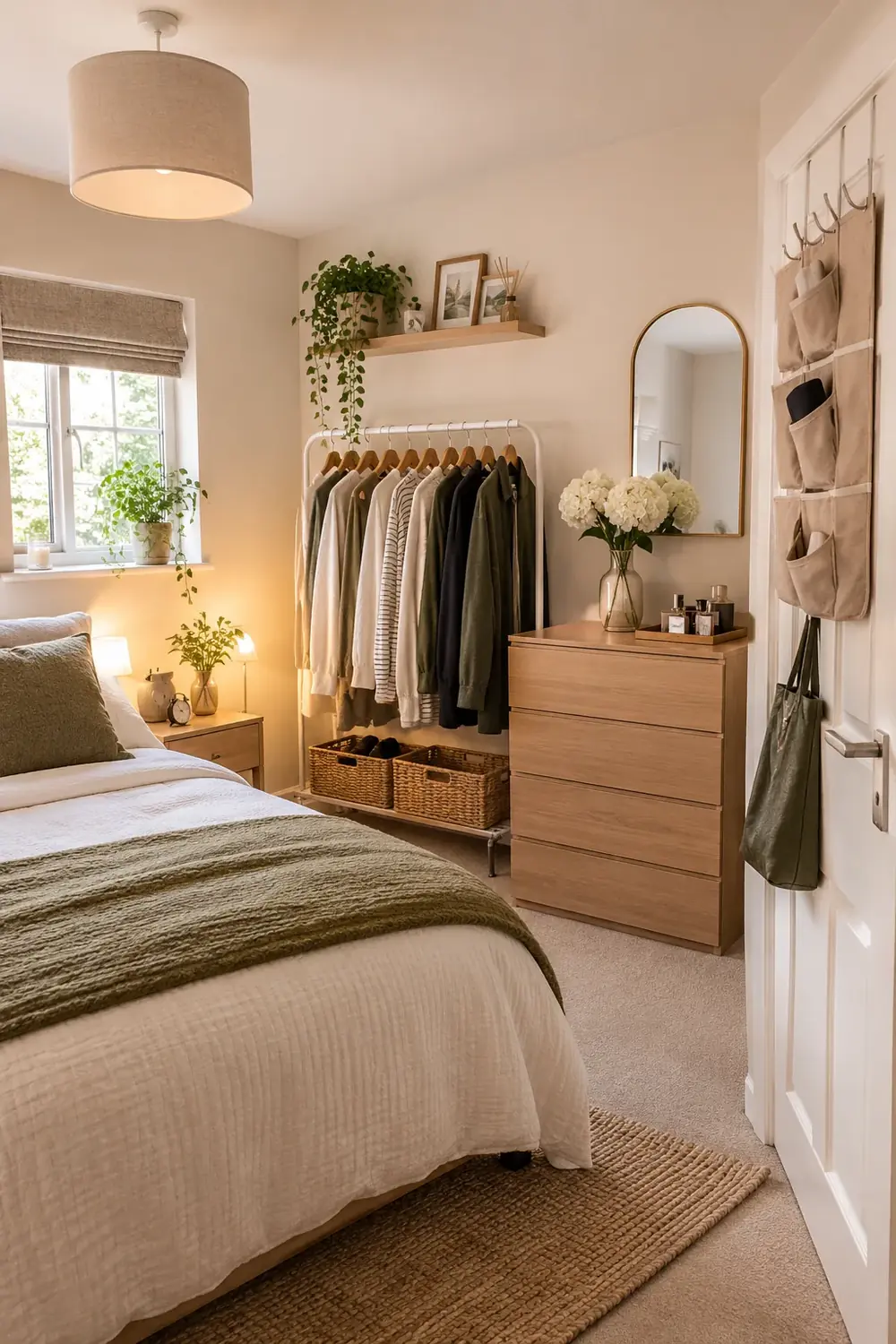
An open rail takes about 40cm of depth against a wall, where a wardrobe needs 60cm plus door swing. It is also far cheaper and comes with you when you move. The trade-off is that everything is visible, so it only works if you keep it tidy.
Fold into drawers, not onto shelves
Stacked shelves fail because you pull from the middle and the pile collapses. Drawers with items filed upright - standing on their edge rather than stacked - let you see everything at once and take out one item without disturbing the rest.
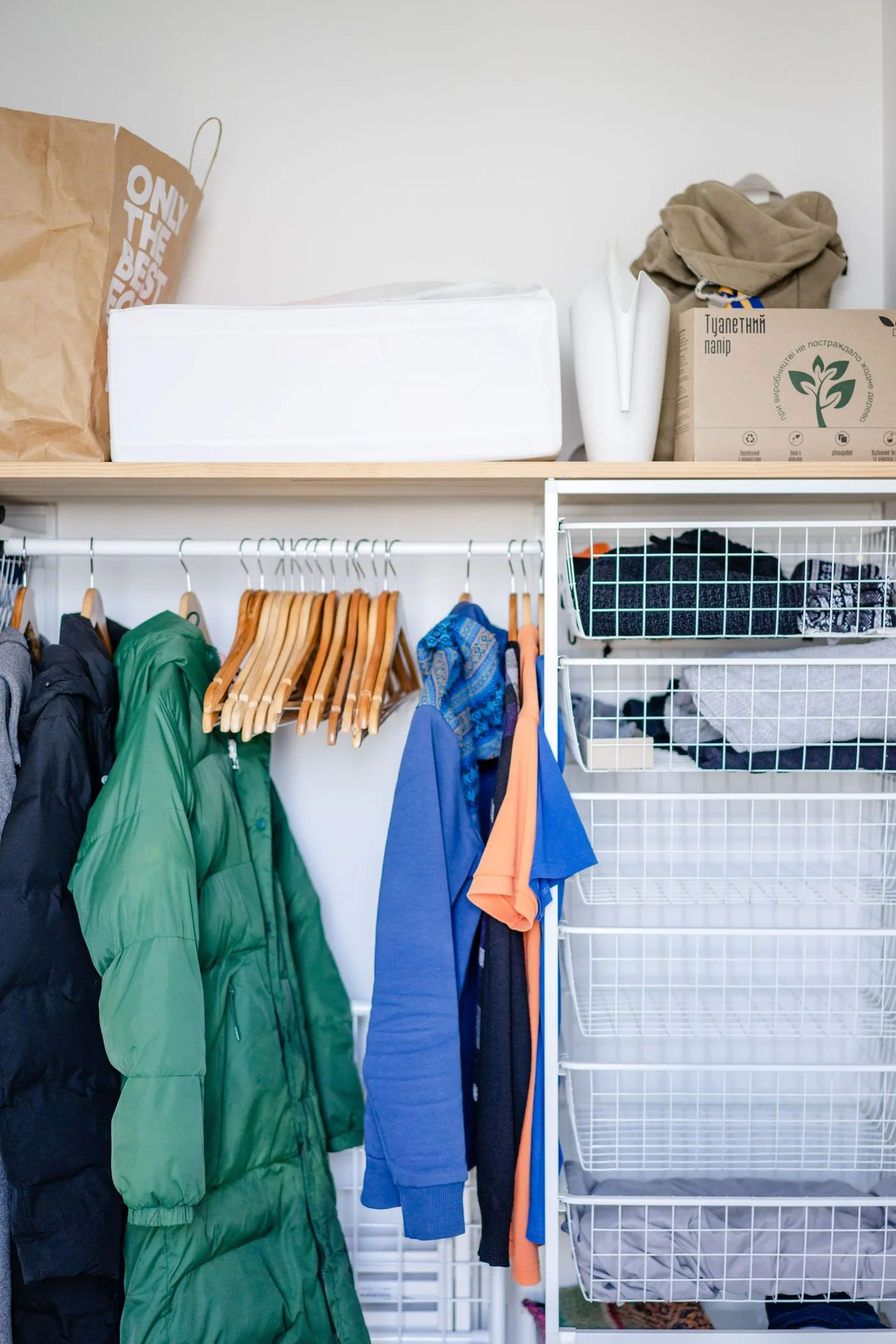
Use the full height of the wall
A tall narrow unit uses the air above head height that most rooms waste entirely. Everyday clothes go at eye level and below. Suitcases, spare bedding and out-of-season items go on top in labelled boxes.
Anchor any tall unit to the wall so it cannot tip, especially if there are children in the house.
The door is storage you already own
An over-door rack holds bags, belts and scarves. Hooks on the back of the bedroom door take dressing gowns and tomorrow's outfit. Neither needs a single screw in a wall.
Give the "wear again" clothes a home
Jeans, jumpers and jackets you have worn once do not belong in the wash or back in the drawer, and without a place to go they end up on the chair. A row of hooks or a slim valet stand gives them somewhere to land, and the chair pile never starts.
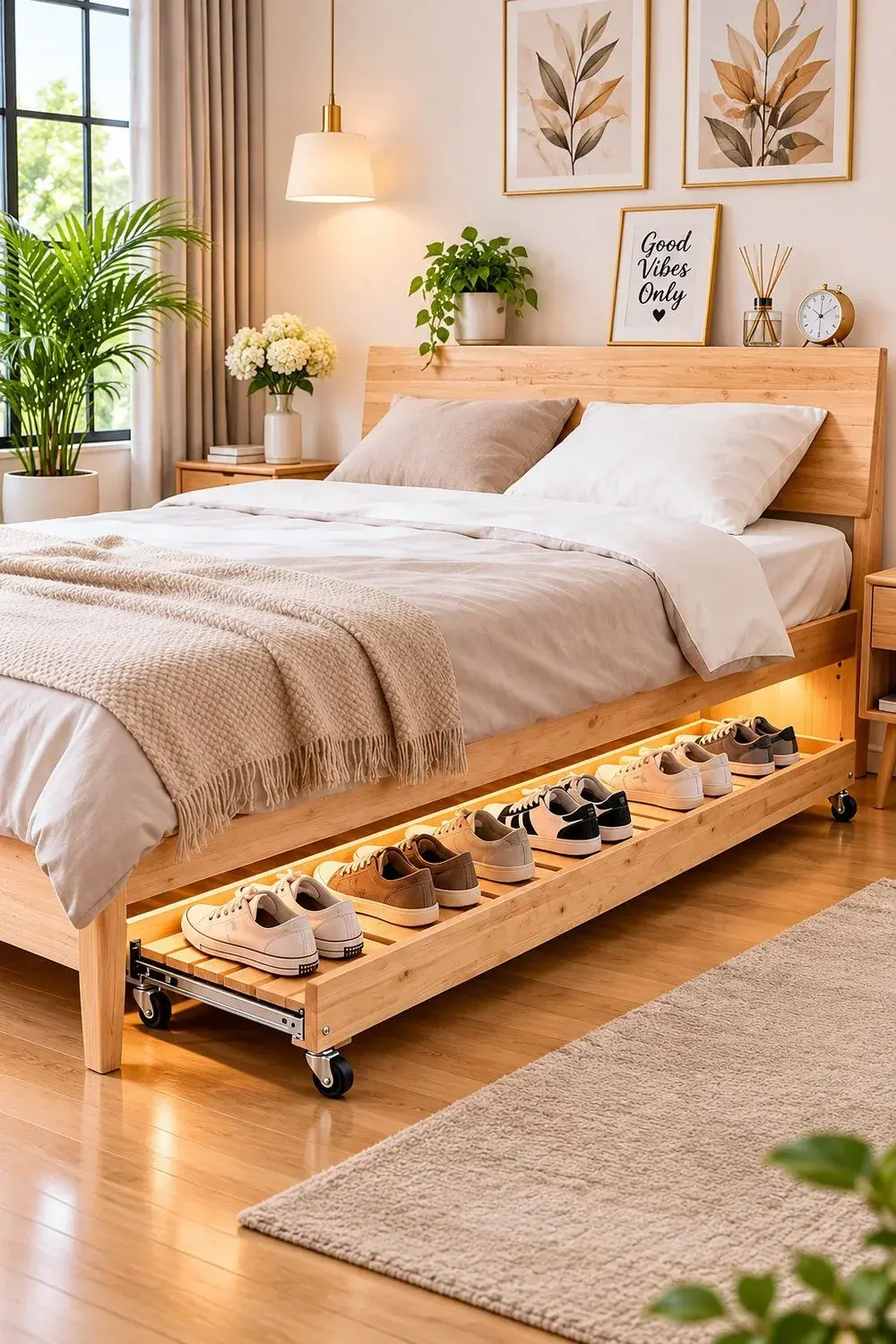
Shoes off the floor
Shoes on the floor make a small room look chaotic faster than anything else. A shallow shoe cabinet is about 24cm deep and sits flat against a wall - much less intrusive than a rack.
Short Line On Budget
“A rail, a small chest of drawers and a shoe cabinet will usually cost far less than a single decent wardrobe.”
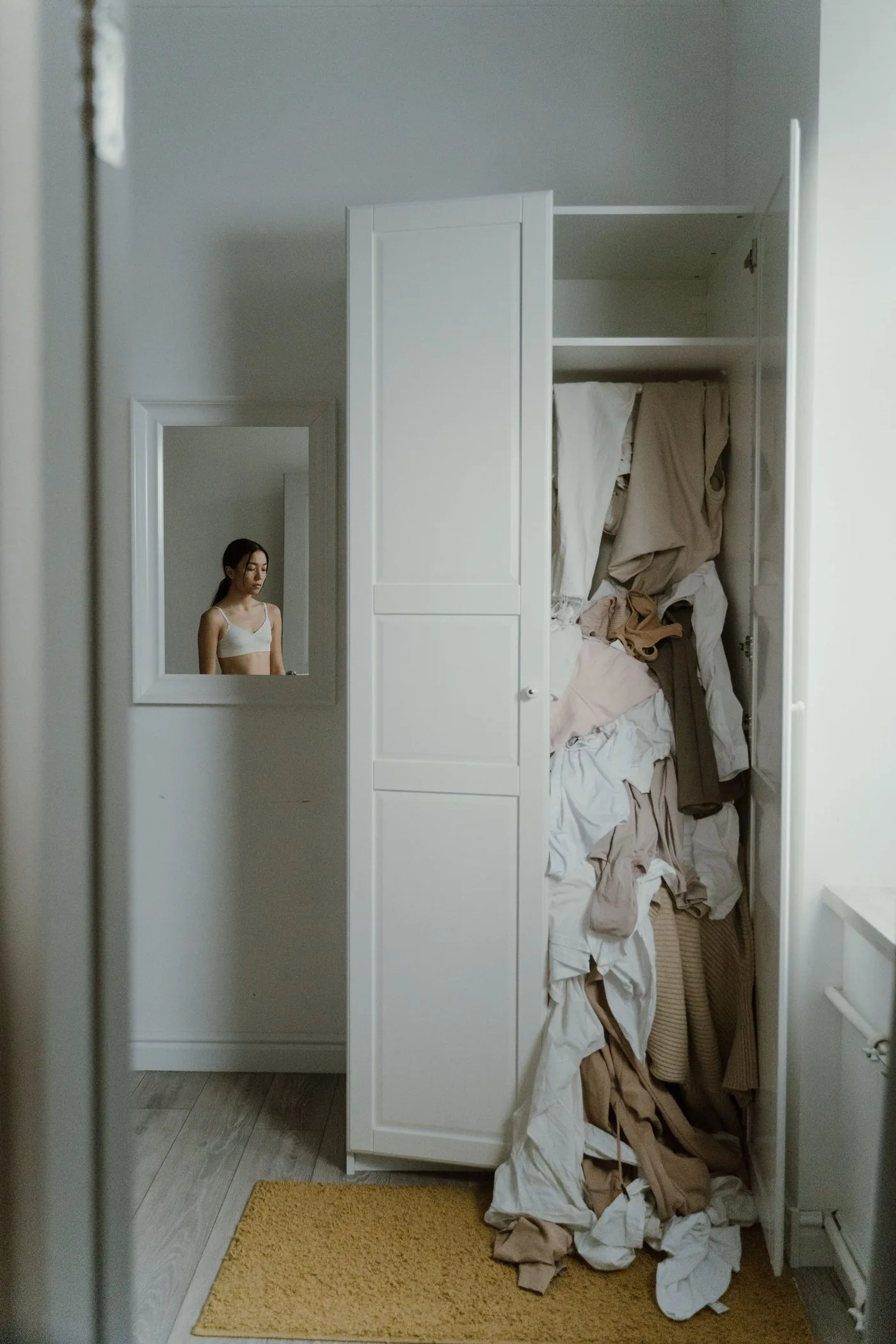
The wardrobe I regretted.
I bought a freestanding wardrobe first and regretted it within a month. It dominated the room, the doors needed clearance I did not have, and it was half empty because most of my clothes should have been folded. The rail and drawers I replaced it with cost less and hold more.
If you only do two things, start with the rail and one set of drawers. You can add the rest as you find out what you actually need.